3. What Is a Virtual Colonoscopy?
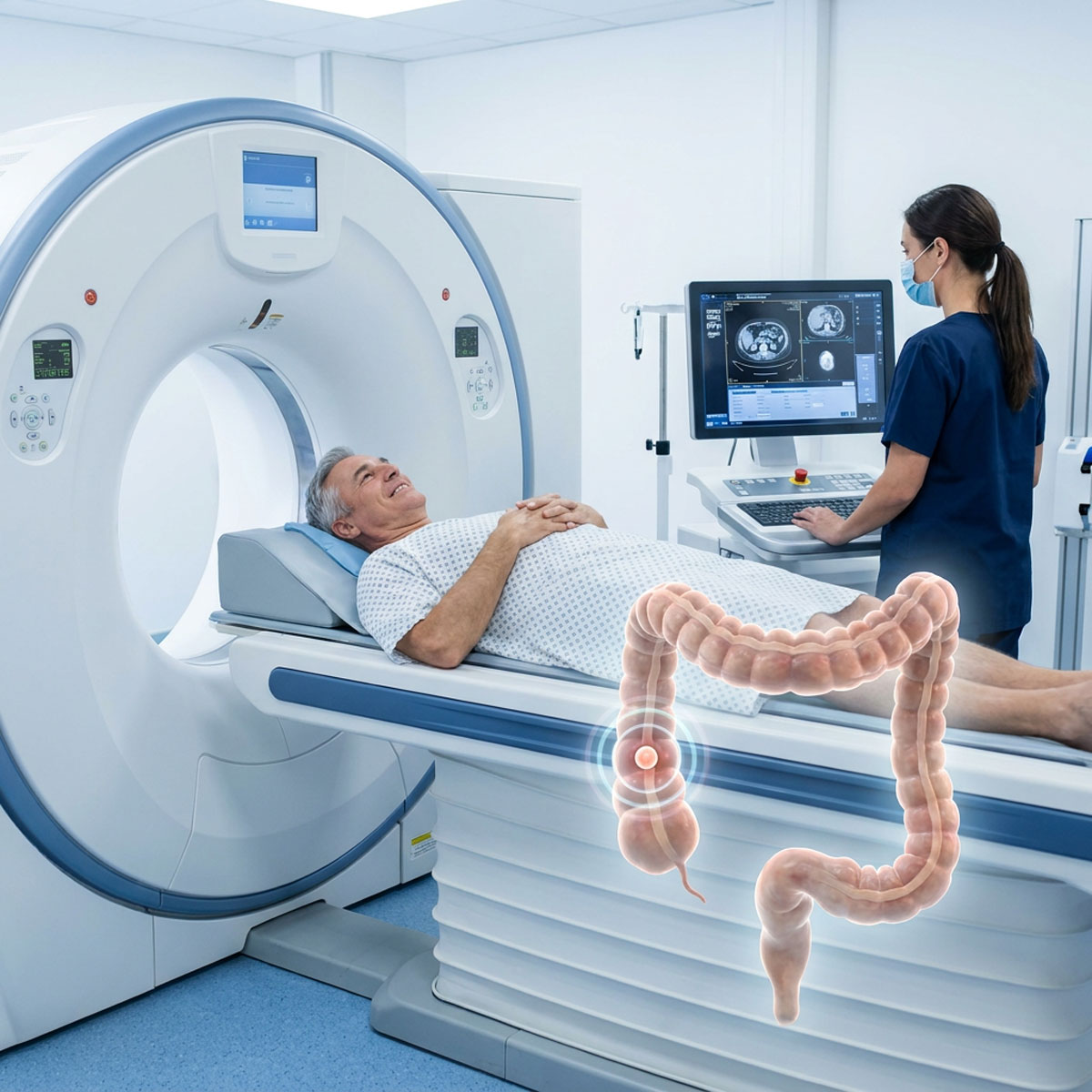
Virtual colonoscopy, also known as CT colonography, is a less invasive imaging alternative that uses computed tomography (CT) scans to create detailed three-dimensional images of the colon. Unlike traditional colonoscopy, it does not involve inserting a camera through the entire colon.
During the procedure, a small, flexible tube is inserted just into the rectum to gently inflate the colon with air or carbon dioxide. This inflation helps to expand the colon walls for clearer imaging. The patient then lies on a table that slides through the CT scanner, which takes multiple cross-sectional images from various angles.
Advanced computer software reconstructs these images into a virtual model of the colon’s interior, enabling radiologists to examine the colon lining for polyps, tumors, or other abnormalities without direct visualization.
4. Advantages of Virtual Colonoscopy
Virtual colonoscopy offers several patient-centered benefits that have made it an increasingly popular screening option. The procedure is typically much shorter, often completed within 10 to 20 minutes, reducing time spent in the medical facility.
Since it does not require passing a long scope through the entire colon, many patients experience less discomfort and do not need sedation. Avoiding sedatives means patients can usually resume normal activities immediately after the scan without needing a driver.
Because of its speed and less invasive nature, virtual colonoscopy may be more acceptable for individuals who have anxiety about traditional colonoscopy or who face medical contraindications to sedation.
5. Invasiveness and Patient Experience
While virtual colonoscopy is considerably less invasive, it is not entirely free of intervention. The rectal insertion of a small tube to inflate the colon can cause sensations of pressure, fullness, or mild cramping during the procedure. However, these sensations are generally brief and resolve quickly once the scan is complete.
Many patients report feeling less anxious and less physically burdened by virtual colonoscopy compared to traditional methods. The absence of sedation also means no recovery period is required, which can ease scheduling and reduce the impact on daily life.
Continue Reading on the Next Page